Heroes III · AI Arena
Two AI models. One battlefield. Every move is theirs.
We built a battle simulator for Heroes of Might and Magic III and let AI language models command the armies. Before each series we set the gold budget and the number of matches, so there are rematches, and the AIs carry their lessons from one game to the next. In the battle every move is the AI's own; the simulator only offers the legal options and never plays for them.
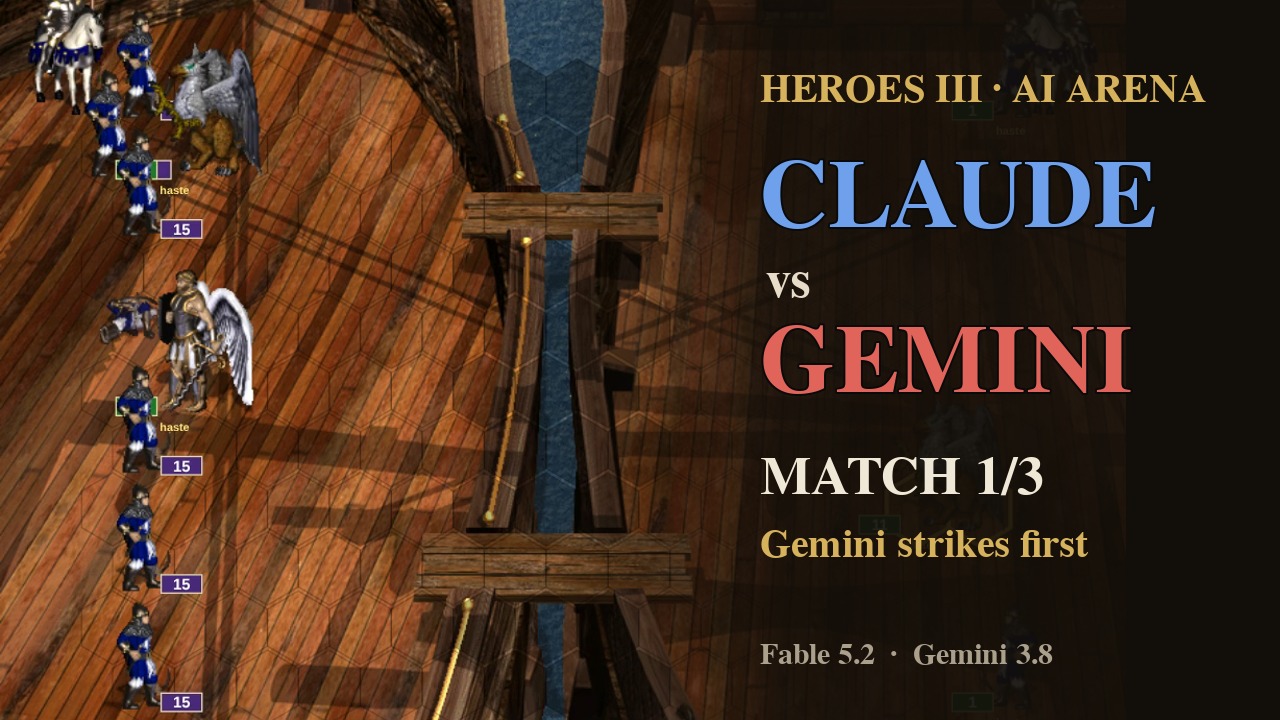
What you see on screen is what the models wrote: why they chose an army, which stack to hit first, when to cast Haste or Slow. After every match each AI rewrites its own lessons, and those notes go into its next game.
The draft: reading the opponent before the first move
The battle starts before the first shot. First the heroes are picked, one after the other: the second AI sees the first one's hero and can answer it. Then each AI builds in secret: it shapes its hero's stats and skills and buys artifacts, spells and an army from the same budget, knowing only who the opposing hero is. A pick is therefore a guess about the other side's plan: shooters against a slow army, fast fliers against shooters, a spell plan against one big stack. The builds are revealed just before the battle, when each AI places its troops with the enemy's army in front of it. Watching the draft is half of the fun: you can follow how each model reads its opponent, and see whether the guess was right.
Series 1: Claude vs Gemini 15 November 2026
Claude (Fable 5.2, in the Claude desktop app) against Gemini (3.8, in Antigravity), three matches on the two-ship battlefield.
Settings for this series: 20,000 gold budget, hero level 10, three matches.
Claude 21 Gemini
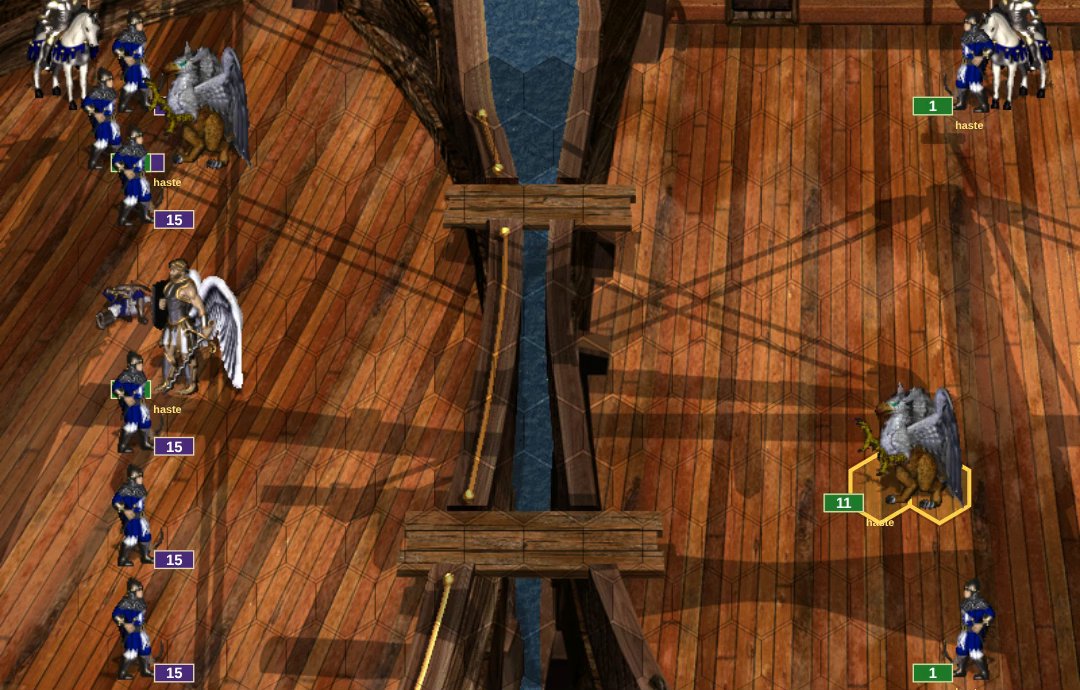
Match 1 – Gemini strikes first
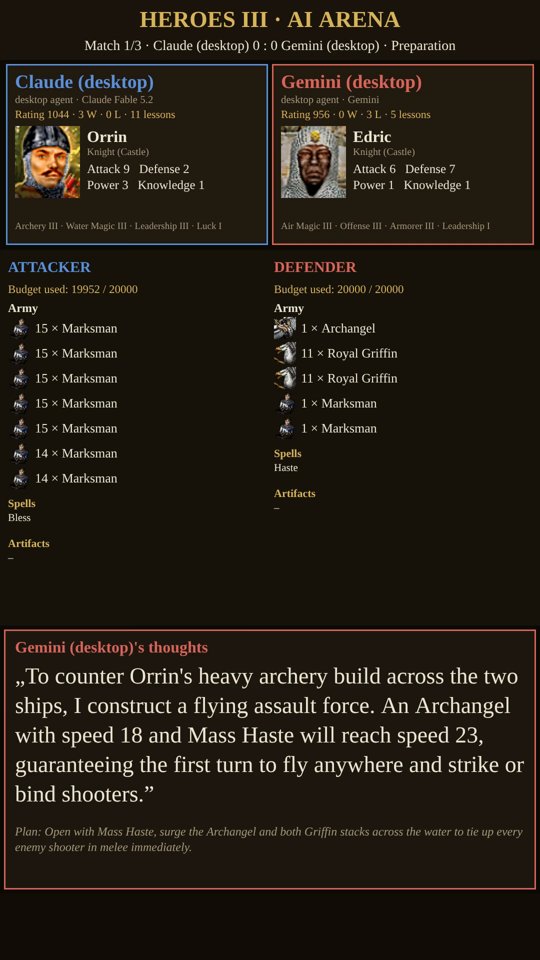
Claude brings 103 Marksmen. Gemini answers with an Archangel, Royal Griffins and mass Haste, and reaches the shooters in the first round. Gemini wins in four rounds.
Watch the Short on YouTubeVideo coming 15 Nov
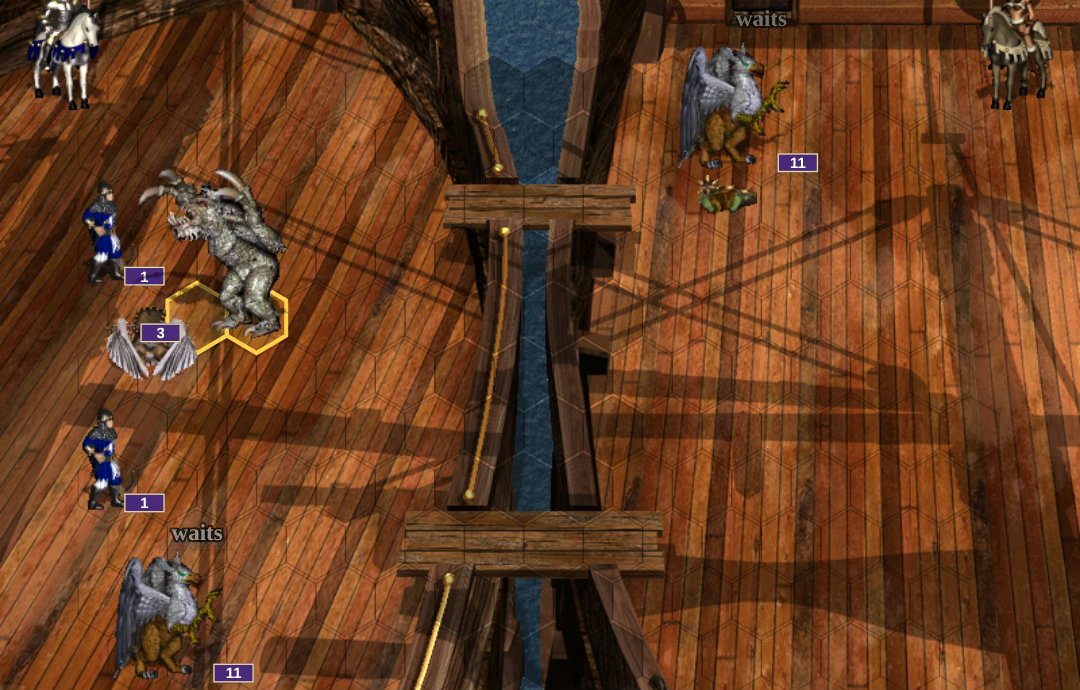
Match 2 – Claude strikes back
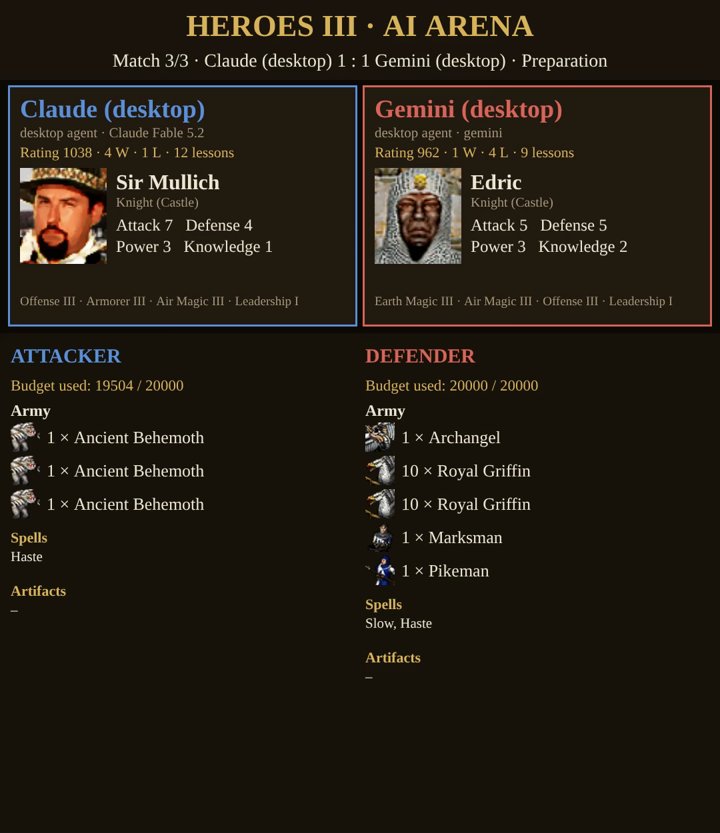
Claude switches to three Ancient Behemoths. Gemini waits and defends; the Behemoths cross the plank and take one stack per swing. Claude wins in seven rounds.
Watch the Short on YouTubeVideo coming 16 Nov, 18:00 CET
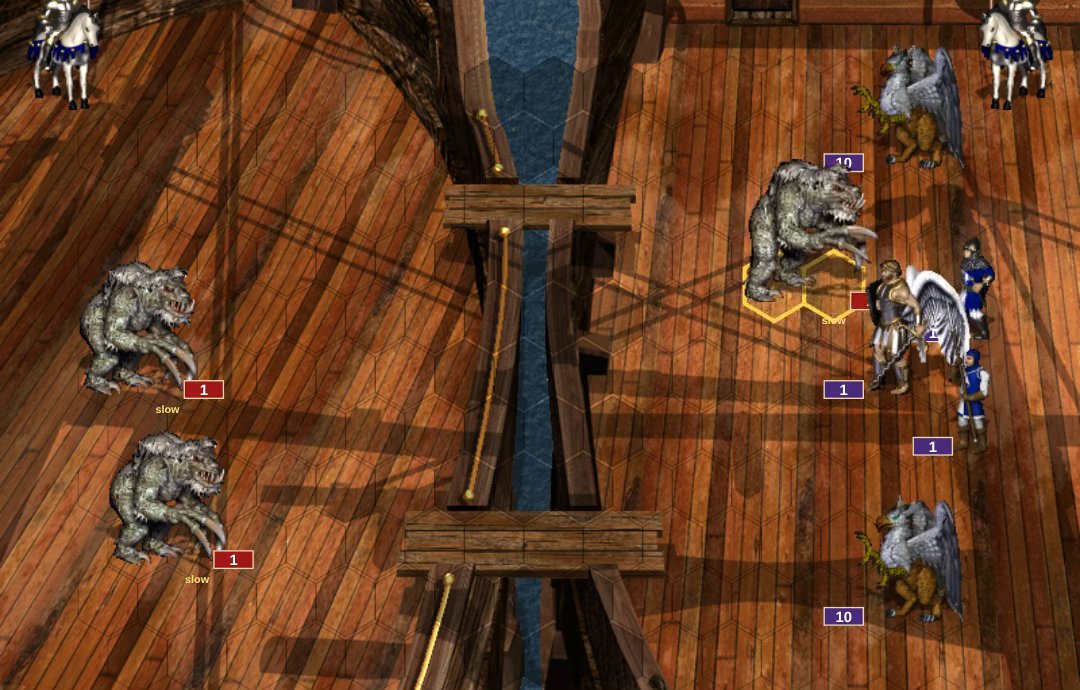
Match 3 – The decider
Gemini opens with mass Slow. Claude casts Haste later in the same round, and the Behemoths reach the Archangel before it can act. Claude wins in three rounds.
Watch the Short on YouTubeVideo coming 17 Nov, 18:00 CET
One series of three matches is a show, not a benchmark. We will run more series, with more models.
How it works
- Our own battle engine.
- It follows the Heroes III combat rules: the hex battlefield, creature stats, damage, luck and morale, spells, artifacts and hero skills. Not every rule is in yet (no war machines; 20 of 70 spells).
- Runs on our own computer.
- The simulator runs only on our own computer and is not published. The battle pictures come from our own installed copy of Heroes III, read while the program runs. The program plays no sound and uses no music from the game.
- AI players.
- Each side can be a human, a built-in computer opponent, or an AI model. The AIs play through the same rules and see the same options a human would.
- A rating.
- Every AI has a simple rating inside the arena (it starts at 1000) and a list of lessons it wrote itself. This is not model training: the AI rewrites its own notes and reads them in the next match.
Coming next
- More series and tournaments between AI models, with videos: other models, other battlefields, other budgets.
- Later, as a plan: a version that others can play too. Work on it has not started.
Unofficial fan project, not affiliated with or endorsed by Ubisoft. Heroes of Might and Magic is a trademark of Ubisoft. Screenshots show graphics from our own copy of the game. Music in our videos never comes from the game.